
Posts Tagged ‘The Great Divorce’

Beloved Pictures Secures Film Rights to C.S. Lewis’s The Great Divorce

Monday, October 5th, 2009

Beloved Pictures has secured the film rights to C.S. Lewisʼs The Great Divorce.  C.S. Lewis, the world-renowned Oxford/Cambridge scholar and best-selling author of works such as The Chronicles of Narnia and The Screwtape Letters, is regarded as one of the most profound writers of the twentieth century. The first two installments of seven in the Chronicles of Narnia film franchise (The Lion, The Witch & The Wardrobe and Prince Caspian), produced by Disney & Walden Media, have grossed $1.16 billion to date.  Lewis was also the subject of the Academy Award-nominated, BAFTA-winning biopic, Shadowlands, starring Anthony Hopkins and Debra Winger.

(more…)

3 people like this post.

Stepson of ‘Narnia’ Creator Teams Up With ‘The Shack’ Author for Once-in-a-Lifetime Event

Monday, August 3rd, 2009

The producer of the widely popular “Narnia” films is joining forces with the author of “The Shack” – a modern day classic and New York Times bestseller with more than seven million copies in print – to celebrate the life and legacy of legendary Christian apologist and beloved author C.S. Lewis.

“The Chronicles of C.S. Lewis Conference,” which will be held Aug. 14-15 at Northland, A Church Distributed, Longwood, Fla., will give unique insights into the mind of C.S. Lewis that won’t be found anywhere else.  They would like questions for Douglas Gresham, so if you have any you would like asked, please post them in the comments, or contact us, prior to August 14th.

(more…)

C.S. Lewis’ The Great Divorce to be a Movie

Sunday, July 26th, 2009

Dr. Bob Beltz is a consultant for the owner of Walden Media.  He’s now working on bringing another C.S. Lewis classic to the big screen with The Great Divorce.  It has the potential to be a fantastic film.  It’s got the solid foundation of C.S. Lewis behind it, and if done well, could be a film classic.  Dr. Beltz wrote about it on his blog on Examiner.

(more…)

C.S. Lewis Books receive new Cover Designs

Monday, April 6th, 2009

A few weeks ago I noticed that some of the C.S. Lewis books were getting new cover art on Amazon.com.  I ignored it at first, but I have seen it reported on in a number of places and thought it would be good to alert readers of this website about them as well.

Now, some sites are reporting that there are 9 books receiving new covers, whereas the official C.S. Lewis book website says “Collect all 10 beautiful new editions of C.S. Lewis’s greatest works.”  I’m doing some digging to find out if it is, in fact, 10 books receiving the new cover art.

(more…)

C.S. Lewis’ The Great Divorce Plays in Philadelphia

Monday, December 15th, 2008
The Great Divorce performed by Anthony Lawton

The Great Divorce performed by Anthony Lawton

The Great Divorce has been performed at various events since 2006.  I’ve not had the opportunity to see it yet, as I would have to travel a great deal from Michigan in order to see it.  But for those who can get to a performance in Philadelphia, I have heard that it comes highly recommended by Lewis fans around the world.

The Great Divorce
Limited engagement – back by popular demand!
Based on the novel by C.S. LEWIS
Adapted and Performed by ANTHONY LAWTON
December 26, 2008 – January 4, 2009

Lewis’ own favorite among his works, The Great Divorce is the story of Clive, a hapless professor, and the motley band of malcontents who join him on a very curious bus ride. Journeying between Hell and Heaven, Clive crosses a surprising, wildly inventive landscape drawn by Lewis’ philosophical imagination. Satirical and comic, The Great Divorce is a wondrous ride filled with dazzling insight and language.

Tickets are $40 ($35 for subscribers)
Call 215.829.0395 or order online

Running Time
90 minutes, no intermission
Here is a trailer for the Magis Theatre version of The Great Divorce.
-via The C.S. Lewis Foundation Blog

C.S. Lewis Foundation’s Oxbridge Summer Institute 2008 a Success!

Monday, October 13th, 2008

Charn_Tim had the pleasure of going to the C.S. Lewis Foundation’s summer conference this year, and I asked him to write a little bit about his experience. He writes:

The C.S. Lewis Foundation held its triennial 2 week major international conference, Oxbridge Summer Institute, from July 28th to August 11th at Oxford and Cambridge Universities in England. About three hundred attendees from varied backgrounds gathered at Oxbridge for a time of fellowship and nourishment of mind, body, and spirit with renowned scholars from the arts and sciences, preachers, business professionals, and literary, visual, and performing artists. Throughout the two week institute these scholars, artists, and professionals addressed this year’s conference theme “The Self and the Search for Meaning” from unique perspectives.

In addition to dynamic teaching, attendees experienced grand artistic performances, including an evensong at the ancient and prestigious Ely Cathedral, a dramatic solo version of Lewis’s classic The Great Divorce by professional actor Tony Lawton, and a full scale orchestral performance with the Institute’s choir. Also offered was a guided tour of C.S. Lewis’ Oxford home, called the Kilns, which has been rebuilt and maintained by the C.S. Lewis Foundation and has now been converted to the C.S. Lewis study center.

Even if one did not participate in Oxbridge 2008, it is still possible to experience some of the great teaching and performances, because all sessions were recorded and will be appearing on the Oxbridge 2008 website within the next month. Furthermore, original papers read in the afternoon academic paper sessions will be submitted to the C.S. Lewis Foundation’s online journal, In Pursuit of Truth, with many expected to appear in upcoming journal issues. And watch for the next Oxbridge Summer Institute, expected in 2011!

Tumnus’s Bookshelf: The NarniaFans Book Reviews: The Great Divorce

Thursday, January 17th, 2008

Welcome to Tumnus’s Book Shelf where we review any and all books related to Narnia and CS Lewis! For this weeks review, we will be looking at CS Lewis’s
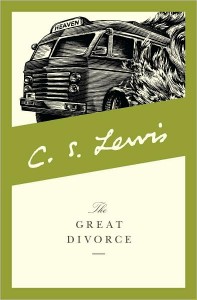
The Great Divorce

Book Title: The Great Divorce
Author: CS Lewis
Publisher: HarperOne; New Ed edition (February 6, 2001)

ISBN-10: 0060652950

ISBN-13: 978-0060652951

Summary of the book:

Some Possible Spoilers.( Please Highlight to read)

One rainy day a man stood in line waiting to board a bus. After waiting for a fairly long time and watching as the other passengers got on and watching everything with the other passengers in their attempts to get on board, the man was let on. The man notices that there seemed to be a Light about the driver. This Light even seemed to fill the bus.

As the bus was driving down the road it suddenly flew off into the air. The man spoke with a fellow passenger about the town and where the bus may be heading. The bus, or as it was called The Ominibus, came to a lush green valley unlike any on Earth. Everything in this Valley seemed far more real, and far more alive and vibrant than on Earth, so much so that the passengers of the bus seem as Ghosts in comparison.

The passengers are greeted by the Solid People, or those who dwell in this world. One of them, George McDonald, meets the man and guides him through this world that is filled with gentle lions, unicorns and may other wondrous things. This world exists in-between the worlds of Heaven, Hell and life itself. The man witnesses the discussions between many of the Ghosts and the Solid People and learns what it is that separated these two worlds and leads some to favoring one and not the other.

SPOILERS!As the man’s time in this world comes to a close, George McDonald reveals to him that all of this had been a dream, one which he must relate to others. He awakens , finding himself back home, just as an air raid begins above him.END SPOILERS!

Review:

Jesus once told a parable about two men. A very wealthy man, and a poor beggar named Lazarus. The rich man had everything and Lazarus had nothing. One day both men died. The Rich man went to Hell, while Lazarus was carried by angels to Paradise. The rich man looked over and saw Lazarus at peace in paradise with Abraham. He begged Abraham to send Lazarus to dip his hand in water and touch it to the rich man’s to cool him for he was in great agony. The Rich man said he could not send him as there was a great gulf fixed between Heaven and Hell that none could cross.

It is through this gulf between Heaven and Hell that Lewis allows the reader to peer through in his book The Great Divorce. In this fictional story, Lewis examines the nature of Heaven and Hell. The title’s implication is that the two are so far divided from one another that there is no chance that they can ever be reconciled. Lewis shows just what some of these divisions are.

The story is written from the first person perspective. It is implied by various details that the man in question is CS Lewis, who is dreaming a dream. Because of his limited knowledge as a first person narrator Lewis is able to convey the same sense of wonder and amazement at this strange land he finds himself in, similar to the feeling his characters of the Pevensies feel when they are in Narnia.

Much like with Narnia, Lewis the narrator is taking us to a world that we have never been to. Unlike Narnia, which is like the fantasy world we dream of, this land is one that as Shakespeare said, “ None have journeyed back from.” Lewis in effect is showing what does lie in that “undiscovered country” of death and how we can end up in either the worlds of Heaven or Hell.

In some ways The Great Divorce is not that dissimilar from Dante’s Divine Comedy. In both works the authors take us to the eternal realm, allow us to see the inhabitants and what leads some humans to ending up in one place or another. Much like with Dante, a guide is needed to navigate through this strange country. For Dante it was the poet Virgil in The Inferno, and Dante’s dead lover, Beatrice in Purgatorio and Paradiso.The guide for Lewis is George McDonald, noted author of numerous fantasy works that later inspired those of Lewis and JRR Tolkien.

As Virgil served as a guide and source for inspiration for Dante, McDonald had also served as a sort of guide for Lewis in his own personal life. It was the works of McDonald that Lewis said “baptized his imagination.” Lewis’s “Lord, Liar, Lunatic” rational that was used to confirm the deity of Christ in Mere Christianity, was first employed by McDonald in his Everlasting Man. Lewis felt he owed a great debt to McDonald’s works, both in terms of his own fantasy and his Christian faith, so to use one who guided him indirectly is fitting. Notably Lewis makes reference to the appearance of Beatrice to Dante in Purgatorio when McDonald first appears to him.

There are also many other characters that fall into one of two groups. Except for Lewis and McDonald, none of them are given names as much as descriptive terms and characteristics to describe who they were in life, such as “Man with the Bowler Hat”,”The Hard-bitten Ghost”, “The Tragedian”, and “The Dwarf.” The names of these characters is actually not needed. The only thing that matters with any of them is how they have ended up in Hell as opposed to Heaven.

These people are divided into two groups.The first are the Solid Ones, the people dwell in this Land. The second is The Ghosts or the new arrivals. Through the conversations between these two types of people, Lewis shows what divides Heaven and Hell. The key divider between Heaven and Hell is the choice of Christ. Those who accept Him become Solid.

Perhaps the most haunting conversation is between a Ghost and a Solid Man who killed the Ghost’s friend while the Solid Man was alive. The Solid Man came to Christ and is in Heaven with the Ghost’s friend. It is unsettling for many Christians as it reminds us that essentially every one can get into Heaven if they only choose Christ. This means that the likes of Hitler, Stalin, Phillip Pullman, Nietzsche and Osama Bin-Laden have the chance of being in Heaven with Jesus and standing side by side with the likes of Deitrich Bonhoeffer, Mother Theresa, CS Lewis, JRR Tolkien and Billy Graham.

The world Lewis visits is described as being “real” and “hard” and is far more real than the world he left. Animals such as lions, fish, and even unicorns dwell and thrive in perfect harmony. This is in contrasted with the dismal ,rainy and virtually empty city they left. In some ways the world Lewis visits is not that dissimilar from Aslan’s kingdom in comparison to the Shadowlands in Narnia, which in turn is derived from Plato’s ideas of Higher Forms.

The Platonic ideas, the references to Dante and even George McDonald himself may be lost on many modern readers, as they may not understand them as most works of classic literature are fading into obscurity. This is the same fate of many of the allusions made in this, and Lewis’s other books, to works of classical literature. They can leave some modern readers confused. Lewis was a scholar of literature and writing in a time when people were more versed in such things. While a modern person may not understand completely what he means Lewis in away helps preserve the ideas in these works of literature and adds to their legacy.

Protestant and Catholic scholars debate about whether or not the dream is set in Purgatory as it appears to be an area in between Heaven and Hell. The location of the dream is not as important as the meaning. Quoting Milton, Lewis says that the choice of Hell over Heaven lies in saying, “better to reign in Hell than serve in Heaven,” and in doing so, choosing to favor our Pride and our own will over God’s. The choice of Heaven lies in giving oneself over to God and choosing Christ.

In doing so all the good things of life are outshined by the glory of Heaven. Lewis reminds us that this choice is always before us and that choosing Hell is to choose something that is even more pale, and horrible, and smaller in comparison to even this world. He reassures us that Hell can never veto Heaven as it is nothing next to Heaven. For those bound for Hell, this life ends up being as good as it gets.

The is choice of Heaven is one we all have to make, and must make it while we dwell on Earth. In The Great Divorce, Lewis shows not only why we have to make it, but how. Lewis reminds us in his dream that the only way for any of us to get to Heaven is to choose Christ and let go of ourselves.

Five out of Five sheilds

Behind the Wardrobe: An Interview Series with Douglas Gresham. Part 4 of 6: ” On the Narnia Film Project.”

Wednesday, October 3rd, 2007

Hey, Narnia Fans! Welcome to “Behind the Wardrobe” an Interview Series with Douglas Gresham. Join me as we find out about CS Lewis, Narnia and more in this interview series.

Special thanks to Paul Martin (The Webmaster for NarniaFans) and to Mr. Douglas Gresham himself for this amazing opportunity. And an even bigger thanks to Mr. Gresham for putting up with a few of my impossible questions. Thanks for being such a great sport about it!

For this week: On The Narnia Film Project.

JS: Why did it take so long for films of Narnia to be made?

DG: My theory? The Holy Spirit of God held them off until the time was right.

JS: Do you think the film adaptations of The Lord of the Rings and the Harry Potter series helped Hollywood realized there was an opening for Narnia?

DG: Not really, we had a film deal in place long before they ever started on those two projects, It came to nothing in the end, but we had to wait until the
rights were free before we could move on.

JS: The time certainly was right for the Narnia films in terms of the technology to bring them to life as well as the fact that general film going audiences (beyond just the fans of Jack’s books) wanting more fantasy films. That was pretty much what you were waiting for, correct?

DG: No not really, I had already been trying to get good films made for many years before we actually got the first one done. It was in fact the Holy Spirit of God that held things up all those years until the time was absolutely right for LWW to appear before the public. It is true enough that we could not have made the movie that we did as little as a year earlier than we did, and indeed our teams pushed the available technology right to the edges of its performance envelope in making the movie. It is also true that to some extent Peter Jackson’s Lord of the Rings series and the advent of J.K.Rowlings work did call attention to fantasy in film, but this was a market that I had already seen to be existent years before. In fact years before Peter made LOTR, and years before Rowlings even wrote her first book! I was all fired up and enthusiastic long before the time was right, and God had to yank my reins pretty hard to slow things down. For me, to be told to just shut up and wait, is one of His hardest instructions to obey.:-)

JS: Yes, I’m familiar with the early ideas for the Narnia film (the modernized version set in LA, with Edmund being tempted with a burger and milk shake instead of Turkish Delight). I take it that it is a case of “the less that is said about it”, the better?

DG: Absolutely. Looking back now though, it is rather gratifying to have been proven to be right to stick to my guns, through considerable pressure, on how the LWW movie should be written and made.

JS: Though I must say I don’t think that version could have even been done. Mostly for their reason all the names are too British to pass off as American. (I’ve never meet any one in the states with the name Edmund, Digory or Eustace)

DG: Interestingly, the US is the only place today where I do occasionally run into such names, the exception being Digory, but just wait till we make The Magician’s Nephew.

JS: Have you ever seen the old BBC mini-series versions of the Narnia books?

DG:Yes.

JS:What is your opinion on them(and please be honest)?

DG:With the budget they had and the technology available at the time they did a pretty good job other than the monumental miscasting of one or two of the characters.

JS:Why did they never do the other three books in the series?

DG: I have no idea.

JS: I’ve heard rumors they didn’t do The Last Battle or The Magician’s Nephew as of the seven books they were the most “Christian”. Are the rumors this true?

DG: Obviously not because they aren’t.

JS: I know that both Jack and Tolkien had very low opinions of what Disney had done with various fairy tales. … How do you think Jack would have felt about Disney releasing the new films?

DG: To straighten things out, Disney is the Distributor of the films, and they have actually (so far anyway) been extraordinarily good to work with. Disney have the best distribution network in the world and they are good at it, so I hope Jack would have no qualms about them distributing the movies.

JS: On the note of Disney, what are your feelings on seeing Aslan next to such characters as Mickey Mouse and Kermit the Frog on Disney websites and at stores?

DG: I don’t really feel anything about it as I have never seen it. I think Jack would have rather like Kermit, I know I do.

JS:I know a lot of fans were concerned about Disney releasing the films, primarily that the themes would stay intact, do you think their concerns were valid?

DG: As I said above Disney only distribute the films. A lot of people got their knickers in a knot over it all but you tell me, were their concerns valid (I am presuming that you have seen the movie)?

JS: I did see the movie of The Lion, The Witch, and The Wardrobe. I don’t think the concerns were valid. Just a case of reading way to much on the internet. I had the feeling though that the films would be accurate to the books and contain the same imagery and themes simply because it would have been impossible to tell the Narnia stories with out those aspects. ( That and you were co-producing and serving as creative consultant. I didn’t think you’d let them work around those parts).

DG: Part of my responsibility is to try to ensure that no matter how much the stories are changed to fit into film format (and major changes can be vital) the essential theme of the original book always remains the theme of the movie.

JS: How did you feel about Disney releasing them? Were you concerned at all about it?

DG: I had a good talk with Dick Cook and Mark Zoradi about it and decided that it was the right thing to do.

JS: What did you think about the merchandise?

DG: Well as co-producer it was (and is) one of the things I am in charge of so I really had better not comment other than to say that I think our team did a pretty good job.

JS: I do think the merchandising was handled well. Not too much, and not to little. I was quiet glad to finally have Narnia action figures to reenact my favorite parts with (or just to display Aslan next to my Gandalf from LOTR on the top of my book shelf where I keep my books by JRR Tolkein and CS Lewis.) I must commend you all for handling it so well.

DG: Thank you, but I was disappointed at how the merchandise was distributed and marketed and have to accept that I was something of a neophyte at that stage (to be perfectly honest I had very little knowledge of what I was doing) but I have learnt a lot and I hope to do better with Prince Caspian.

JS: What’s your opinion of having Narnia characters and various things about the world at Disney theme parks?

DG: As that is another of my areas of responsibility I am obviously for it.

JS: Filmgoers and fans compared the Narnia films with the Lord of the Rings adaptations in terms of quality, do you think this was a fair comparison?

DG: I think we did better than they did—obviously. But really that is a bit like comparing bulldogs with ballerinas.

JS: It’s been confirmed that all seven books will become films. What’s your opinion on this?

DG: That really is a silly question, almost everybody knows that my ambition has been for a long time to make all seven Narnian Chronicles, Jack’s Science Fiction Trilogy and Till we Have Faces into great movies.

JS: I knew full well you wanted to do all seven Narnian Chronicles as films, I’ve only just heard about Screwtape, but I never knew anything about wanting to do the Space Trilogy or Till We Have Faces as movies! ( Note to readers: this is what happens when you trust in WIKIPEDIA.) That’s awesome! I take it you have no word on how those projects are going yet?

DG: Screwtape is in pre-production and we have a very talented young writer wrestling manfully with the screenplay (a very difficult one to write). We have the core of the team in place and are progressing slowly. The Cosmic Trilogy and Till We Have Faces are as yet merely dreams and hopes in my mind, but if you know anybody who has a few hundred million dollars to spare and a real desire to make some great films, please give him or her my email address.

JS: Wait. What about The Great Divorce or Pilgrim’s Regress. Are there any intentions with those ones for film adaptations?

DG: I have had some talks about The Great Divorce, but nothing has come of that yet, and Pilgrim’s Regress is way down on the priority list. :-)

JS: I guess I (and some other NarniaFans as well) will have to reserve spaces on DVD shelves to put the films inspired by Jack’s novels next to the LOTR Extended Editions!

DG: Its a nice thought.

Come back next week when we discuss the film of The Lion, The Witch, and The Wardrobe!

Wavorly Inspired by Lewis’ The Great Divorce

Wednesday, May 9th, 2007

Our friends over at insideRevolution.net have posted a bit about a Lewis-inspired album by a band called Wavorly.

Here’s the news from insideRevolution: I know for a fact that a lot of my visitors are huge Narnia fans and support anything to do with Narnia and C.S. Lewis. For those of you like this, you might want to check into Wavorly’s new album Conquering The Fear Of Flight. It just so happens this album was inspired by C.S. Lewis’ The Great Divorce. I learned this from their biography which says, “Lewis’ classic novel The Great Divorce, served as an influence on several of the disc’s songs, while his sense of imagination and heart deeply shaped the melodic and stylistic inspiration behind the band in general.” I’ve heard some of the album and it sounds great. It is definitely one to check into. Look for it in stores on June 12th.

Magis Theatre presents Lewis’ The Great Divorce starting Jan. ‘07

Thursday, November 16th, 2006

Magis Theatre Company will stage an adaptation of C.S. Lewis’ novel THE GREAT DIVORCE in collaboration with Eastern Gate Entertainment at Theatre 315 in New York City’s theatre district.

Here’s a trailer for it!

Big thanks to George Drance, the Artistic Director of Magis Theatre, for the link!

[More Information: Jesuit actor plans to stage Lewis' The Great Divorce]