Narnia Tours to Follow in Footsteps of Lord of the Rings

Now both literary and film fans of Lewis’ classic can be whisked away on their own magical adventure to the locations featured in some of the most memorable scenes in the movie thanks to a number of tour companies now offering Narnia-related tours in England, Northern Ireland and New Zealand.

Harper Taxi Tours in Belfast, Northern Ireland, the place of Lewis’ birth, have announced plans to supplement its politically themed itineraries with a C.S. Lewis tour.

Stops on the 75-minute C.S. Lewis Black Taxi Tour of Belfast include Lewis’ childhood church, St. Mark’s, and the Victoria home, Little Lea, in whose “Little End Room” the young author concocted his first stories while looking out across the Mourn Mountains – “which under a particular light made me feel that at any moment a giant might raise his head over the next ridge,” he wrote.

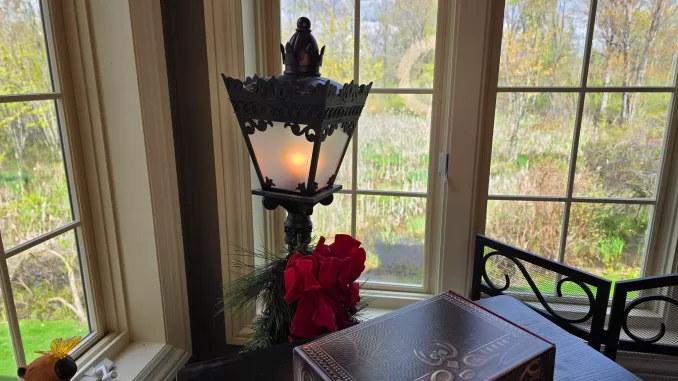
Other Narnia attractions on offer in Northern Ireland include Crawfordsburn Country Park where fans can see the lamppost that inspired the one in Narnia, as well as the 17th century Dunluce Castle on Antrim Coast, believed to be the basis for Cair Paravel, the royal fortress in Narnia.

Meanwhile in New Zealand, where locals are already accustomed to hoards of Lord of the Rings tourists, tour company Canterbury Sightseeing is to launch Narnia tours to the location of the dramatic battle scene at Flock Hill Station, near Christchurch.

“It is incredible how nostalgia affects people,” Canterbury Sightseeing director Melissa Heath told The New Zealand Herald. “People are prepared to pay an incredible amount of money to revisit their memories.”

[Christianity Today]

Public flock to see what life was like for CS Lewis

Belfast’s link with CS Lewis, brought to life for visitors through a new guide to his haunts across the city and beyond, is proving to be a “phenomenal” hit with locals and visitors alike, according to the Northern Ireland Tourist Board.

The booklet entitled ‘The CS Lewis Story ? Unlock Your Imagination’, which was produced to cater for the increased interest in the author following the launch of the big-screen adaptation of the classic novel The Lion, the Witch and the Wardrobe, has been literally flying off local shelves.

Janet Watt, branch manager for the Hollywood Arches Library, confirmed: “The public response to the CS Lewis booklet, produced by the Northern Ireland Tourist Board and Belfast City Council, has been phenomenal.

“We had boxes of them and have had to order more.

“The release of the film combined with all the wonderful events staged across Belfast and here in the library, has definitely ignited people’s interest in the man and certainly people from this side of town are keen to know more about him; especially as he lived in this area and drew inspiration on what he saw here for his books.”

And she went on to point out: “The library also has the Ross Wilson CS Lewis sculpture outside the doors and there is always a steady flow of people with cameras posing at it – even more so now with all the publicity.”

The popular booklet incorporates a self-guiding tour to the Belfast of CS Lewis, which points out the Lewis family home, the CS Lewis centenary sculpture, and the Linen Hall Library; which is home to a unique collection of books about CS Lewis.

In addition to Belfast, the guide details CS Lewis’ connection to the surrounding areas of the Mourne Mountains and the Antrim Coast, where he developed a love of swimming.

It also points out the links between his love of Celtic myths and legends and his writing.

Anthony Cranney, NITB Culture, Heritage and Activity Tourism manager, added: “The release of the film presented the perfect opportunity for Northern Ireland to promote its strong links with CS Lewis.

“The booklet helps tourists discover his childhood home of Belfast and the many inspirational landscapes across Northern Ireland that helped him to create the world of Narnia.

“This truly is a unique and exciting time for Northern Ireland.”

Narnia helps promote Northern Ireland

Advertisements are set to bombard 600 UK cinemas over the coming weeks in a bid to attract people to Northern Ireland with the slogan, “discover the land that inspired Narnia.”

The campaign is part of Tourism Ireland’s £40 million venture over the next three years to attract visitors to both northern and southern parts of the island.

The movie version of CS Lewis’ Chronicles of Narnia hits screens this weekend.

CS Lewis grew up in Northern Ireland and the film includes many shots of the province, including the Giant’s Causeway.

Bruce Robinson of the department of enterprise trade and investment said Northern Ireland tourism, which attracted 2.3 million visitors in 2004, continues to grow.

“Revenue from overseas visitors grew by ten per cent in 2004 and in August 2005, hotel occupancy reached 71 per cent, the highest recorded in the last ten years,” he said.

The three-year campaign is hoped to reach 200 million people.

Noteworthy Find For A CS Lewis Fan

A Northern Ireland CS Lewis fan has come forward with a letter from the author which he stumbled across in a public auction. The Co Down man, who wishes to remain anonymous, came across the find in a Belfast auction some years ago, but has now dug it out to have it inspected in the wake of the global success of the CS Lewis film, The Lion The Witch And The Wardrobe.

He said: “I found it among a lot of items which appeared to be a house clearance and it was actually sitting in a copy of one of his books, The Screwtape Letters. “It is nice to have it as he is a writer I greatly respect. “It was written from his home, The Kilns in England, to a lady in Belfast during the 1940s and he was simply telling her about the publication date for his next book. “I have read various biographies about him and was aware that he used a reference number on every letter he wrote, and this one is no exception.” Former chairman of the CS Lewis Centenary Group, James O’Fee, said: “When CS Lewis first became famous he would have been getting hundreds of letters every day and it was his policy to reply to each one by return post. “Although this doesn’t sound like a very substantial letter, it just shows you that such items can turn up in the most unexpected places.”

[By Philip Bradfield]

Narnia movie ‘could help tourism’

Renewed interest in the Narnia stories of east Belfast-born author CS Lewis could attract more visitors to Northern Ireland, tourism bosses have predicted.

The movie adaptation of The Lion, the Witch and the Wardrobe topped UK and US box office charts in December.

The Northern Ireland Tourist Board and Belfast City Council have produced a booklet on Lewis-related attractions.

These include landmarks from the writer’s Belfast childhood as well as the Mournes and the Giant’s Causeway.

The booklet examines how Irish and Norse mythology associated with these sites further inspired Lewis’s work and how Ireland’s Christian heritage affected the religious element of his works.

It also has details on newer facilities such as Belmont Tower and the Holywood Arches Library, which is home to the CS Lewis centenary statue.

Northern Ireland Tourist Board (NITB) spokesman Anthony Cranney said: “The release of the film presents the perfect opportunity for Northern Ireland to promote its strong links with CS Lewis.

“The NITB in partnership with Belfast City Council has produced a booklet that will help tourists discover his childhood home of Belfast and the many inspirational landscapes across Northern Ireland that helped him to create the world of Narnia.”

City that inspired Narnia fantasy

With work under way on a film of CS Lewis’ The Lion, The Witch and The Wardrobe, BBC News Online’s Greg McKevitt investigates the roots of its Belfast-born author and the Northern Ireland settings that fired his boyhood imagination.

C.S. Lewis StatueA statue was unveiled in Belfast in 1998, the centenary of Lewis’ birth.

Ever since the Lord of the Rings trilogy came to the cinemas, New Zealand’s spectacular scenery has been associated with the Oscar-winning recreation of Middle Earth imagined by the books’ author JRR Tolkien.

Hoping to repeat this success, the Disney company has announced it is backing a movie of CS Lewis’ most famous tale.

The Lion, The Witch and The Wardrobe describes a war in a frozen fantasy land between the forces of darkness, led by the White Witch, and the forces of good, led by the lion Aslan.

With its fantasy setting and cross-generational appeal, Walt Disney executive Dick Cook obviously had the Tolkien adaptations in mind when he said it had “the potential to be just the start of an extraordinary series”.

Although it will be filmed in New Zealand, many believe the imaginary world of Narnia was inspired by Lewis’ childhood in east Belfast.

The author left for boarding school in England in his early teens after his mother died, and spent much of his adult life as an academic in Oxford, depicted by Sir Anthony Hopkins in the 1993 biopic Shadowlands.

However, Northern Ireland always remained in his heart, and he would return for annual holidays.

In his autobiography, Surprised by Joy, Lewis wrote: “Heaven is Oxford lifted and placed in the middle of the County Down.”

When he was seven-years-old, his family moved to Little Lea, a detached Edwardian home which still stands on Circular Road in east Belfast, privately-owned and marked only by a commemorative blue plaque.

CS Lewis’ boyhood home, Little Lea, which sparked his imagination.

Tony Wilson, Chairman of the CS Lewis Association of Ireland, said this was the home of the wardrobe where the author would hide and dream up his make-believe worlds.

“I’m sure this set off the idea in the book of opening the wardrobe and the young boy getting inside,” he said.

“Once you shut yourself inside a wardrobe, you can imagine anything.”

Lewis wrote in his autobiography that he lived “entirely in (his) imagination” during his time there.
“I am a product of long corridors, empty sunlit rooms, upstair indoor silences, attics explored in solitude, distant noises of gurgling cisterns and pipes and the noise of wind under the tiles. Also of endless books.”

Mr Wilson said some believed that Lewis got the inspiration for Narnia’s topography from the view near Stormont of the distant Mourne mountains and Strangford Lough in County Down.
But what about the lion?

The author’s grandfather was a minister about a mile down the road at St Mark’s Church in the city.

At the old rectory, an ornate handle in the shape of a lion’s head can be found on the door, at about head-height for a child aged five or six.

The door knocker which some say inspired the character Aslan.

It’s not clear whether this was the direct inspiration, as the character of Aslan the lion was intended as a metaphor for the crucifixion and resurrection of Christ.

Tolkien even had an indirect influence on Lewis’ Christianity.

The two men were both lecturers at Oxford and they were close friends who shared an interest in medieval history and mythology, according to Mr Wilson.

“While Tolkien was writing the Lord of the Rings, he would meet Lewis and a number of other lecturers at a private room in an Oxford pub,” he said.

As a devout Catholic, Tolkien had an indirect effect on Lewis’ eventual conversion from atheism to Christianity, as the pair would have long conversations about religion and theology.

David Bleakley, author of the book CS Lewis: At Home in Ireland, said the two men were also fascinated by children’s imaginations.

“Lewis had great faith in the common sense and innate decency of children,” he said.

Mr Bleakley said the reason for the Chronicles of Narnia’s enduring success was its broad appeal.
“The thing about Lewis which is different to most writers is that he’s international and inter-generational,” he said.

“I think 30m copies of his books were sold in the US last year.”

In 1998, a statue was erected at Holywood Arches library in east Belfast to mark the centenary of Lewis’ birth.

The life-size bronze depicts Digory Kirke, the writer’s fictional alter ego, entering Narnia through the magic wardrobe.

Although filmmakers may look to New Zealand in conjuring up Narnia, what fired Lewis’ imagination can be found a lot closer to home.