Archive for December, 2005

Narnia movie ‘could help tourism’

Saturday, December 31st, 2005

Renewed interest in the Narnia stories of east Belfast-born author CS Lewis could attract more visitors to Northern Ireland, tourism bosses have predicted.

The movie adaptation of The Lion, the Witch and the Wardrobe topped UK and US box office charts in December.

The Northern Ireland Tourist Board and Belfast City Council have produced a booklet on Lewis-related attractions.

These include landmarks from the writer’s Belfast childhood as well as the Mournes and the Giant’s Causeway.

The booklet examines how Irish and Norse mythology associated with these sites further inspired Lewis’s work and how Ireland’s Christian heritage affected the religious element of his works.

It also has details on newer facilities such as Belmont Tower and the Holywood Arches Library, which is home to the CS Lewis centenary statue.

Northern Ireland Tourist Board (NITB) spokesman Anthony Cranney said: “The release of the film presents the perfect opportunity for Northern Ireland to promote its strong links with CS Lewis.

“The NITB in partnership with Belfast City Council has produced a booklet that will help tourists discover his childhood home of Belfast and the many inspirational landscapes across Northern Ireland that helped him to create the world of Narnia.”

Always winter, never Christmas

Saturday, December 31st, 2005

After I enjoyed the new feature film “Narnia” of the C.S. Lewis story, “The Lion, the Witch and the Wardrobe,” I reflected on a thought: What would it be like if it was, as in Narnia, “always winter and never Christmas”?

There would be no family gatherings. The days would get shorter and colder, with nothing to look forward to — no Christmas gifts, no holiday traditions, no Saint Nicholas. No Christmas carols, no decorations, no Christmas trees or holly berries — no Charlie Brown Christmas specials, no Bing Crosby in “White Christmas,” no Jimmy Stewart in “It’s a Wonderful Life.”

Children would have to go to school the entire month of December, and Christmas Day would be just another average day.

Sounds tragic, doesn’t it? Yet even without all those things, we could still celebrate Christmas, because since the fourth century, Christmas has always been about the celebration of the birth of Jesus Christ — a birth that changed the course of history.

For if Christ had not been born, the world would be far different than one could imagine.

For instance, Jesus taught his followers to love their neighbors as themselves. As they lived out that command, they established charities. The early followers of Christ stressed the importance of supporting widows, orphans, the sick and disabled. They organized efforts to help those who were dying. They built, staffed and paid for hospitals.

In recent times, Christ’s followers founded nearly every charitable organization on the earth, including the American Red Cross, Salvation Army, World Relief, World Vision, Samaritan’s Purse, Food for the Hungry and Compassion International.

[Read the rest at Tracy Press]

‘Narnia’ actor Skandar Keynes plays ‘bad boy’ Edmund

Saturday, December 31st, 2005

Skandar Keynes as EdmundIt’s not easy being Edmund in “The Lion, the Witch and the Wardrobe.” Three of the four Pevensie siblings are brave, heroic and all-around noble in C.S. Lewis’ classic Narnia series. But Edmund causes most of the problems by taking the side of the evil White Witch.

And, ultimately, he makes the biggest change when he repents.

We wanted to know how 14-year-old Skandar Keynes feels about playing Edmund in the film “The Chronicles of Narnia: The Lion, the Witch and the Wardrobe.” But we figured the best person to ask the questions would be someone who’s tackled the part, too. Eric Kielczewski, 16, of Grand Prairie, Texas, played Edmund at Creative Arts Theatre & School in Arlington, Texas, in April. Skandar called us from his home in London to answer Eric’s e-mailed questions.

First, however, we had to know how he felt when he got the role:

“I was on the bus going to school, and it was raining. They said they would call me on Thursday, and it was Friday, so I was down, not feeling too great. My phone rang, and they said, ‘You’ve got the part!’ They were yelling at me on the bus, ‘Turn off your phone, boy!’ so I said, ‘Thanks! Bye!’ I was cheering inside, though.”

Q: What was the hardest part of developing the character of Edmund? For me it was making the live audience believe I had changed from evil to good (that and sustaining a British dialect).

Skandar Keynes: The emotional scenes were hard. I don’t usually cry, and that was a challenging thing to do. But once I had done it, it was really rewarding. It is a great feeling doing something that challenges you.

Q: How did you film scenes with Aslan (the lion) since he was CGI (computer-generated imagery)?

Skandar Keynes: I only had one scene with Aslan where I’m nodding at him. I was really nodding at a rock. In scenes with the other kids, Andrew (Andrew Adamson, the director) and his assistants would act out Aslan’s lines dressed up in green suits so they could be edited out.

[Read the rest at LJworld.com]

1 people like this post.

When are movies too intense for children?

Saturday, December 31st, 2005

As it attempts to halt the year’s box office slide, Hollywood is bringing out the howitzer for the holidays — the turbocharged children’s film. For the last five years, PG-13 has ruled the box office; it’s the imprimatur of the top-grossing films of the year. Now kids’ films, PG-rated and amped up with computer graphics, are trying to catch up.

The gentle fantasy of C.S. Lewis’ “The Chronicles of Narnia: The Lion, the Witch and the Wardrobe,” with its snowy landscapes and talking animals, gives way to a fight-to-the-death battle between loyal Narnians and the ghoul-filled army of the White Witch.

“The line between what’s a family movie and what’s a general audience movie has been blurring for years now,” said Nina Jacobson, president of Walt Disney’s Buena Vista Motion Picture Group. “Many families went to see `Spider-Man’ together or `Lord of the Rings.’ That goes in the other direction, too — the CG-animated (computer generated) movies are also playing as general audience entertainment.”

Jacobson said that “The Chronicles of Narnia: The Lion, the Witch and the Wardrobe” is “intense” in parts and “appropriate for 7 and up, but it depends on the kid. It’s up to the parent to decide what’s right.”

Lord of the Rings” was able to hold to PG-13 because most of the creatures killed were not human. “The Lion, the Witch and the Wardrobe” managed to keep its even child-friendlier rating by staging an enormous battle that is “99.9 percent bloodless but still very powerful,” according to Jacobson. “Nobody’s head gets chopped off.”

A sequence in which creatures catch on fire was removed to avoid the PG-13 rating that “Harry Potter and the Goblet of Fire” got — putting it in the same rating category of strictly adult fare such as “War of the Worlds” and “Mr. & Mrs. Smith.”

In the case of the Potter and Narnia books, filmmakers argue that their first loyalty is to the text, but turning words into images might make the stories too intense for their original audience.

“When it comes to the impact of fright reaction, there is no question — images stick in the psyche much longer,” said Peter Vorderer, head of the University of Southern California Annenberg School for Communication’s entertainment program.

Other people suggest that the intense new films are a reflection of the tough times in which we live and can provide a safe empowerment fantasy for children. Quoting “Narnia” author Lewis, the film’s producer, Mark Johnson, said, “Since it is likely they will meet cruel enemies, let them at least hear of brave knights and heroic courage, otherwise you’re making their destiny not brighter but darker.”

By Rachel Abramowitz and Mary McNamara, Tribune Newspapers: Los Angeles Times

[Read the rest at the Chicago Tribune]

Georgie Henley Wins Award

Saturday, December 31st, 2005

Georgie Henley took home the Phoenix Film Critics Society Award for Best Performance by a Youth in a Lead or Supporting Role – Female for The Chronicles of Narnia: The Lion, The Witch and The Wardrobe. Congratulations, Georgie!

She has also been nominated for a Chicago Film Critics Award for “Most Promising Performer.”

Early LWW DVD Cover

Friday, December 30th, 2005

We’ve posted an early DVD cover for what appears to be the single-disc edition of The Chronicles of Narnia: The Lion, the Witch and the Wardrobe.

The DVD is rumored for an Easter 2006 April release date in three versions:
1: 16×9-enhanced 2.35:1 Widescreen
2: 1.33:1 cropped “Full Screen”
3: Collectible Deluxe Edition

The Lion, the Witch and the Wardrobe DVD Cover

Churches let Narnia film speak for itself

Friday, December 30th, 2005

Families have taken to the Disney film The Chronicles of Narnia: The Lion, the Witch and the Wardrobe, but not at the urging of religious leaders.

Disney has targeted Christian groups with promotional material, but Australian churches have taken no particular line on the film.

By comparison, evangelical churches in the US have gone over the top with their admiration for the movie. “In America, some very significant Christian millionaires got behind it and there was considerable promotion,” said Anglican Bishop of South Sydney Robert Forsyth.

High-profile US supporters of the film included Florida Governor Jeb Bush, who has called for every child in his state to read the Narnia book.

Bishop Forsyth said: “We are not millionaires and Australians have a slightly more relaxed style. We are a little less in-your-face.

“If Christians go around ranting and raving we basically scare people off.

“I think the answer is we should keep quiet and let the film do its work in its own way.”

Archbishop of Sydney Peter Jensen cited The Lion, the Witch and the Wardrobe in his Christmas speech but said it was up to individual churches whether they would make use of the Narnia story.

The film opened in Australia on Boxing Day and has earned more than $6.5 million at the box office. In the US, it has taken $US165 million ($227 million) in 17 days.

‘Narnia’ tours light the way

Friday, December 30th, 2005

In Disney’s new blockbuster The Chronicles of Narnia: The Lion, the Witch and the Wardrobe, four young siblings use a wardrobe door to travel from wartime England to the mythical landscapes of Narnia, the fairy-tale world made famous by British novelist C.S. Lewis.

And for movie and literary pilgrims in search of real-life Narnias, the celluloid version of Lewis’ classic already is sparking related tours in England, Northern Ireland and New Zealand, where several key locations were filmed.

In the author’s birthplace of Belfast, Northern Ireland, Harper Taxi Tours plans to supplement its politically themed itineraries with a C.S. Lewis tour. Stops will include Lewis’ childhood church, St. Mark’s, and the Victorian home, Little Lea, in whose “Little End Room” the young author concocted his first stories while gazing at the Mourne Mountains — “which under a particular light,” he wrote, “made me feel that at any moment a giant might raise his head over the next ridge.”

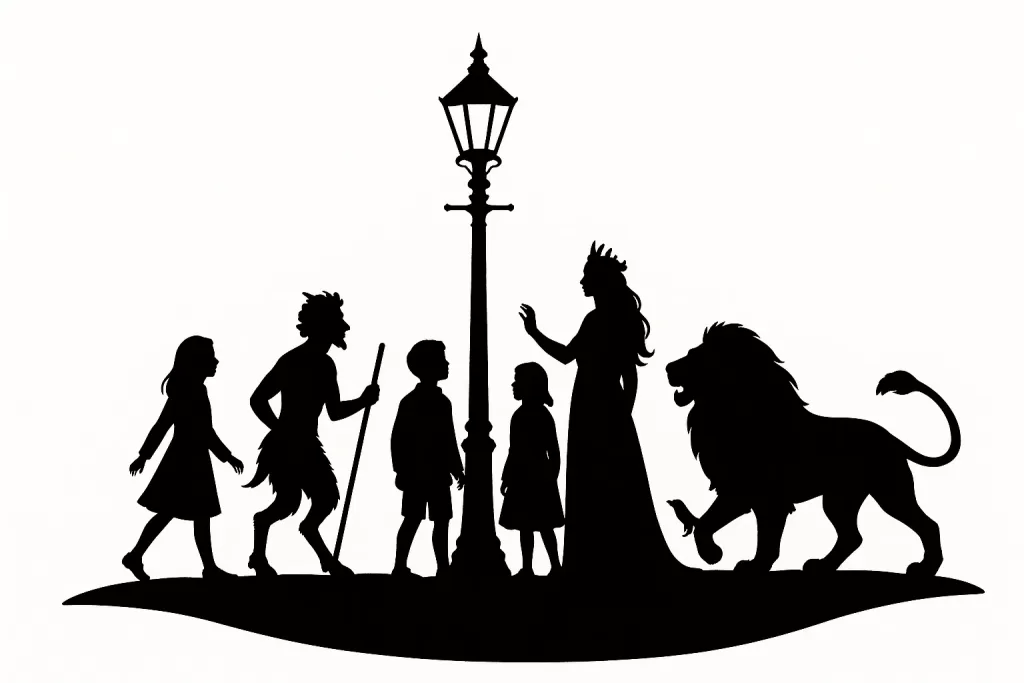
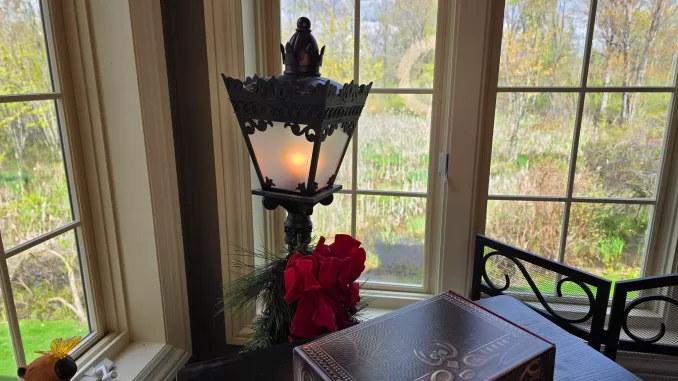
Elsewhere in Northern Ireland, visitors to Crawfordsburn Country Park can see the lamppost that inspired the one in Narnia, and the 17th-century Dunluce Castle on the Antrim Coast, believed to be the basis for Cair Paravel, the royal fortress in Narnia.

Though a northerner at heart, Lewis, who died in 1963, spent most of his adulthood in southern England, including Oxford, where he studied, taught and downed so many pints at the Eagle and Child pub that a special “C.S. Lewis chair” is dedicated to his memory.

In New Zealand — where, thanks to the Lord of the Rings trilogy, locals are already accustomed to hordes of costume-clad tourists seeking magical scenery — Canterbury Sightseeing is launching Narnia tours to the film’s climactic battle scene at Flock Hill Station, near Christchurch.

“It is incredible how nostalgia affects people,” Canterbury Sightseeing director Melissa Heath told The New Zealand Herald. “People are prepared to pay an incredible amount of money to revisit their memories.”

As a witch, Swinton casts spell

Wednesday, December 28th, 2005

When considering whether she wanted to play the role of the evil White Witch in “The Chronicles of Narnia,” Tilda Swinton remembered what Margaret Hamilton said about being the Wicked Witch of the West in “The Wizard of Oz.”

“She was talking about waiting for a subway train in New York and noticing, out of the corner of her eye, little children backing away from her,” Swinton recalls. “And I thought, ‘Is this what I want? Children shying away from me for the rest of my life?’ ”

Swinton took the role.

“What I loved about the White Witch is that she’s not a stereotypical villain with the whole mustache-twirling thing,” Swinton says. “Her evil is more unfathomable. It’s a kind of coldness, an emotional remove. She’s quiet.”

In the film, the White Witch has cast a spell over Narnia, creating a winter that never ends. The four children who venture through the wardrobe door into Narnia must summon their strength to join with the mystical lion Aslan and break the witch’s curse.

“It’s intense,” Swinton says. “My children (twin girls, age 7) don’t want to see it. I think they’re very wise.”

As for other children who have seen it, Swinton says she’s already had her subway moment.

“After a recent screening, there was a question-and-answer session and this tiny child – way too young for the movie, I would have thought – was bursting to come up to me,” Swinton says. “She couldn’t get close enough. So there you have it – the insatiable masochism of the child. Or her exceptional good taste.”

Two colleges lay claim to Narnia portal

Wednesday, December 28th, 2005

Two U.S. colleges claim to have the piece of furniture that inspired C.S. Lewis to write “The Lion, the Witch and the Wardrobe.”

The dueling wardrobes are in the English department at Westmont College in Montecito, Calif., and the library of suburban Chicago’s Wheaton College, the Los Angeles Times reported Monday.

Both Christian schools say their wardrobes were owned by the author, who died in 1963. But there is no concrete proof which armoire was the one that led Lewis and countless readers to the land of Narnia.

Westmont’s Web site claims its Lewis wardrobe in Reynolds Hall “served as a model for the magical one he described in his famous children’s book.”

Wheaton officials tend to downplay the literary significance of their armoire, the Times said. However, there is a sign posted next to the wardrobe in the Marion E. Wade Center research library warning: “We do not take responsibility for people disappearing.”