This week’s mailbag features a topic that is very interesting to me: that of the relationship of J.R.R. Tolkien and his writing to C.S. Lewis and his. Other topics include what Anna Popplewell and William Moseley are up to next, and Andrew Adamson’s past in Papua New Guinea. I’ll see if I have the time to reach back into the mailbag archives after the five letters that I received this week. Be sure to look through the comments from last week’s mailbag for some fascinating follow-up information as well! Let’s get started!
As many of you know, Tolkien and Lewis were great friends for many years. They were influential on each other’s works and both taught at Oxford.
The place to go for news on The Lord of the Rings and The Hobbit, for the last 10 years has been none other than TheOneRing.net! We’d like to congratulate them on 10 great years, and look forward to the next 10 years as well! I’ve been a big fan of the website for many years, and they’ve provided inspiration for me with this site as well. This is not to mention the fact that they have allowed me to use their movie review engine for the Narnia Fan Reviews!
With The Hobbit films coming out in a few years, there’s a lot to look forward to! And we wouldn’t have it any other way!
For those interested, Weta created a birthday video and a card, that you can see at WetaNZ.com! It’s a well deserved, and well earned reward for a job well done!
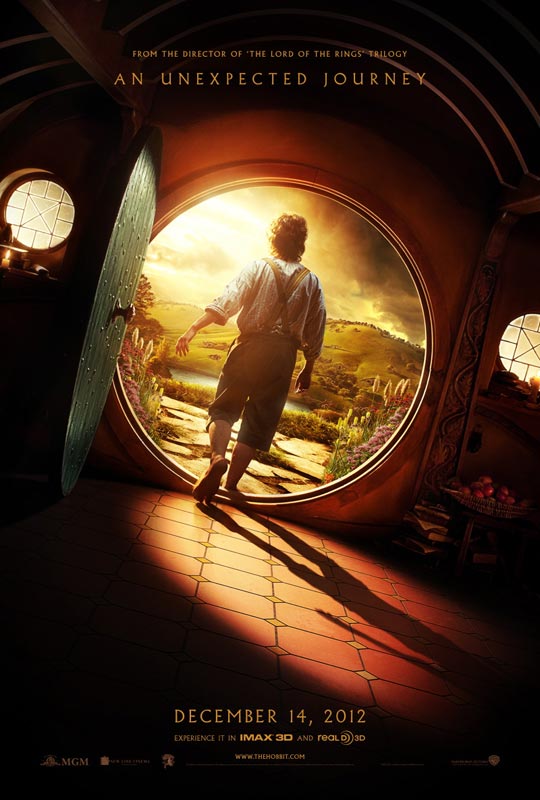
There’s a rumor that is about to spread, starting at “My Park Magazine.” That rumor is that James McAvoy, Mr. Tumnus in The Lion, the Witch and the Wardrobe, is close to signing to play Bilbo Baggins in Guillermo del Toro’s The Hobbit.
James McAvoy is set to play Bilbo Baggins in ‘The Hobbit‘.
Film bosses are rumoured to be close to signing McAvoy – who played the faun Mr. Tumnus in ‘The Chronicles of Narnia: The Lion, the Witch and the Wardrobe‘ – to play the fantasy hero in the big screen adaptation of J.R.R. Tolkien’s book.
An insider said: “A number of names have privately been doing the rounds, including Daniel Radcliffe and Jack Black but James is the one the film’s bosses really want. They’re expected to have talks with him soon so hopefully it could be confirmed in the not too distant future.”
Director Guillermo del Toro has refused to comment on the rumours, only saying: “I can tell you it’s down to a few names that we all agree upon. For our first choice we all said the same name, it was completely magical.”
‘The Hobbit‘ is the prequel to the ‘Lord of the Rings‘ trilogy.
In the recent movies directed by Peter Jackson, Baggins was played by Ian Holm.
I’d like to point something out, though. They did not get that quote from del Toro with regards to James McAvoy. In fact, no names have been mentioned yet. Not McAvoy, not Jack Black and most certainly not Radcliffe. Daniel Radcliffe will be too busy filming Harry Potter 7 and 8 for The Hobbit, anyway, I am sure.
No, the quote is from Empire Online, which goes on to say: Obviously the script is yet to be written by Jackson, Del Toro and Philippa Boyens, so there won’t be a name attached to this for some time (despite poking with sticks Del Toro was mum on the identity of the actor, who probably doesn’t know he’s in the frame yet). Del Toro says we can expect “at least a year before we announce any casting”. So, while they have a name in mind, you can count any forthcoming rumours as false, at least until the script is written.
J.R.R. Tolkien and C.S. Lewis, as most of us know, were great friends and colleagues. Now Tolkien’s “The Hobbit” is coming to the Big Screen!
Press Release:
ACADEMY AWARD-WINNER PETER JACKSON AND NEW LINE CINEMA JOIN WITH MGM TO PRODUCE “THE HOBBIT,” EAGERLY-ANTICIPATED FANTASY ADVENTURE EPIC
NEW LINE AND MGM TO CO-PRODUCE AND SHARE WORLDWIDE DISTRIBUTION RIGHTS
PETER JACKSON AND FRAN WALSH TO EXECUTIVE PRODUCE TWO FILMS BASED ON “THE HOBBIT”
Los Angeles, CA (Tuesday, December 18, 2007) Academy Award-winning filmmaker Peter Jackson; Harry Sloan, Chairman and CEO, Metro-Goldwyn-Mayer Studios Inc. (MGM); Bob Shaye and Michael Lynne, Co-Chairmen and Co-CEOs of New Line Cinema have jointly announced today that they have entered into the following series of agreements:
* MGM and New Line will co-finance and co-distribute two films, “The Hobbit” and a sequel to “The Hobbit.” New Line will distribute in North America and MGM will distribute internationally.
* Peter Jackson and Fran Walsh will serve as Executive Producers of two films based on “The Hobbit.” New Line will manage the production of the films, which will be shot simultaneously.
* Peter Jackson and New Line have settled all litigation relating to the “Lord of the Rings” (LOTR) Trilogy.
Said Peter Jackson, “I’m very pleased that we’ve been able to put our differences behind us, so that we may begin a new chapter with our old friends at New Line. ‘The Lord of the Rings’ is a legacy we proudly share with Bob and Michael, and together, we share that legacy with millions of loyal fans all over the world. We are delighted to continue our journey through Middle Earth. I also want to thank Harry Sloan and our new friends at MGM for helping us find the common ground necessary to continue that journey.”
“Peter Jackson has proven himself as the filmmaker who can bring the extraordinary imagination of Tolkien to life and we full heartedly agree with the fans worldwide who know he should be making ‘The Hobbit,’” said Sloan, MGM’s Chairman and CEO. “Now that we are all in agreement on ‘The Hobbit,’ we can focus on assembling the production team that will capture this phenomenal tale on film.”
Bob Shaye, New Line Co-Chairman and Co-CEO comments, “We are very pleased we have been able to resolve our differences, and that Peter and Fran will be actively and creatively involved with ‘The Hobbit’ movies. We know they will bring the same passion, care and talent to these films that they so ably accomplished with ‘The Lord of the Rings’ Trilogy.”
“Peter is a visionary filmmaker, and he broke new ground with ‘The Lord of the Rings,’” notes Michael Lynne, New Line Co-Chairman and Co-CEO. “We’re delighted he’s back for ‘The Hobbit’ films and that the Tolkien saga will continue with his imprint. We greatly appreciate the efforts of Harry Sloan, who has been instrumental in helping us reach our new accord.”
The two “Hobbit” films – “The Hobbit” and its sequel – are scheduled to be shot simultaneously, with pre-production beginning as soon as possible. Principal photography is tentatively set for a 2009 start, with the intention of “The Hobbit” release slated for 2010 and its sequel the following year, in 2011.
The Oscar-winning, critically-acclaimed LOTR Trilogy grossed nearly $3 billion worldwide at the box-office. In 2003, “Return of the King” swept the Academy Awards, winning all of the eleven categories in which it was nominated, including Best Picture – the first ever Best Picture win for a fantasy film. The Trilogy’s production was also unprecedented at the time.
For more information about “The Hobbit” films, please visit www.TheHobbitBlog.com.
About New Line Cinema Corporation:
Celebrating its 40th anniversary year, New Line Cinema is the most successful independent film company in the world. Its mission is to produce innovative, popular and profitable entertainment in the best creative environment. In addition to the production, marketing and distribution of theatrical motion pictures, the fully-integrated studio has divisions devoted to home entertainment, television, music, theater, merchandising and an international unit. In 2005, New Line partnered with HBO to form Picturehouse, a new theatrical distribution company to release independent films. A pioneer in franchise filmmaking, New Line’s Oscar-winning The Lord of the Rings trilogy is one of the most successful film franchises in history. New Line is a division of Time Warner, Inc. (TWX).
About Metro-Goldwyn-Mayer Inc.:
Metro-Goldwyn-Mayer Inc., through its operating subsidiaries, is actively engaged in the worldwide production and distribution of motion pictures, television programming, home video, interactive media, music and licensed merchandise. The company owns the world’s largest library of modern films, comprising around 4,100 titles. Operating units include Metro-Goldwyn-Mayer Studios Inc., Metro-Goldwyn-Mayer Pictures Inc., United Artists Films Inc., Ventanazul, MGM Television Entertainment Inc., MGM Networks Inc., MGM Domestic Networks LLC, MGM Distribution Co, MGM International Television Distribution In, Metro-Goldwyn-Mayer Home Entertainment LLC, MGM ON STAGE, MGM Music, MGM Worldwide Digital Media, MGM Consumer Products and MGM Interactive. In addition, MGM has ownership interests in international TV channels reaching nearly 120 countries. MGM ownership is as follows: Providence Equity Partners (29%), TPG (21%), Sony Corporation of America (20%), Comcast (20%), DLJ Merchant Banking Partners (7%) and Quadrangle Group (3%). For more information, visit www.mgm.com.
About Peter Jackson/Wingnut Films:
Peter Jackson is one of the world’s most successful filmmakers. His monumental achievement co-writing, co-producing and directing The Lord of the Rings trilogy (with fellow Academy Award winners and frequent collaborators Fran Walsh and Philippa Boyens) earned a total of 30 Academy Award nominations and 17 Academy Awards. Jackson and Walsh received their first Oscar nomination for Best Original Screenplay for their acclaimed film Heavenly Creatures. Jackson, through his New Zealand-based Wingnut Films banner, also was responsible for the globally successful 2005 remake of King Kong which earned over $500 million worldwide and 3 Academy Awards. Currently, Jackson is directing an adaptation of The Lovely Bones, from the acclaimed best-selling novel by Alice Sebold. He is also developing a trilogy of films with Steven Spielberg based on Tintin, the world renowned comic book series by Herge.
A recent survey in the United Kingdom (UK) found that The Lion, The Witch and The Wardrobe was the eighth most re-read book among UK readers. The Narnia book was beaten by many noteworthy novels and series, including Pride and Prejudice by Jane Austin, The Lord of the Rings by JRR Tolkien, and the Harry Potter series by JK Rowling, which took the number one spot.
The survey was conducted by Costa to mark the 2007 Costa Book Awards. Out of a sample of 2,034 people, it was found that 77% of UK readers re-read books, and almost a fifth of readers will re-read their favourite book more than five times.
Other books re-read more often than The Lion, The Witch and The Wardrobe are The Da Vinci Code by Dan Brown, 1984 by George Orwell, Jane Eyre by Charlotte Bronte and The Hobbit, also by JRR Tolkien.
David J. Theroux, the Founder and President of the C. S. Lewis Society of California has e-mailed us with the latest updates on many upcoming events that you’re all invited to attend! I hope that some of you have the chance to visit these events and join Lewis Societies, or even have the opportunity to start one in your own area if one does not exist. Again, sorry for the delay again. I was reminded of this e-mail by a user that actually visited the group and had a great time. Here’s the update:
Please note the following in this issue of the C.S. Lewis Society Update (6/23/07):
1. Forthcoming Films Based on Books by C.S. Lewis and J.R.R. Tolkien
2. Mere Christianity
3. Next meetings of the C.S. Lewis Society’s Bay Area Book Club: “Why does suffering exist?”
4. Other Events
1. Forthcoming Films Based on Books by C.S. Lewis and J.R.R. Tolkien:
A. The acclaimed film-maker Michael Apted will direct the third film in C.S. Lewis’s “Chronicles of Narnia” series, “The Voyage of the Dawn Treader.” Among Apted’s earlier films are “Gorillas in the Mist,” “Coal Miner’s Daughter,” “Lipstick,” and “Amazing Grace.”
New Zealander Andrew Adamson, who has directed the first two films in the series (“The Lion, The Witch and The Wardrobe” and “Prince Caspian”) will serve as a producer for the third Narnia film. (“Prince Caspian” is scheduled for release on May 16, 2008, and “The Voyage of the Dawn Treader” will debut on May 1, 2009.)
B. Oscar-nominee director and screen writer Randall Wallace, whose film credits include “Braveheart,” “Pearl Harbor,” and “The Man in the Iron Mask,” is writing the screenplay for (and may direct) the film version of Lewis’s book, “The Screwtape Letters.” The film is being produced by Ralph Winter, whose many films include the last four Star Trek films, “Fantastic Four: Rise of the Silver Surfer,” “X-Men: The Last Stand,” “Planet of the Apes,” and “The Puppet Masters,” as well as the widely popular ABC-TV series, “Lost.”
C. Plans are also underway for a 2009 prequel film of J.R.R. Tolkien’s “The Lord of the Rings.” The producers are trying to get the original cast re-assembled for this film as well as a film version of Tolkien’s book, “The Hobbit.” Additional film interest has already developed in the new novel by Christopher Tolkien (J.R.R.’s son) that was released in April, “The Children of Hurin,” set hundreds of years before the events of the “Rings” trilogy, during the First Age of Middle Earth.
2. Mere Christianity:
Are materialist modernism and post-modernism on their way out? Consistent with C.S. Lewis’s work in critiquing the pervasive materialism, reductionism, scientism, collectivism, statism, and de-humanization of the “modern” era, more and more top scholars are revealing the unique and enduring truths of Christian theism.
Here is a sampling of interviews in this regard:
“An Interview with Francis Collins, Director of the National Human Genome Research Institute” (Time)
“Spiritual Disciplines in a Postmodern World: An Interview of Dallas Willard” (Newsweek)
“Mere Mission: N.T. Wright Talks about How to Present the Gospel in a Postmodern World”
“Theism as a Properly Basic Belief: An Interview with Alvin Plantinga”
“Divine Action: An Interview with Sir John Polkinghorne”
“Argument from Reason: An Interview with Victor Reppert”
“Faith and Reason: Was Christianity the Engine of Western Progress? An Interview with Rodney Stark”
“A Man of Ethics and Science: An Interview with Ian Barbour”
3. Next meeting of the C.S. Lewis Society’s Bay Area Book Club:
Books for Discussion on the Topic, “Why does suffering exist?”
THE PROBLEM OF PAIN and A GRIEF OBSERVED, by C.S. Lewis:
Meeting moderator/leader: Daniel Classen
Wednesday, June 27th, 7:30 p.m.
Wednesday, July 11th, 7:30 p.m.
THE PROBLEM OF PAIN answers the universal question, “Why would an all-loving, all-knowing God allow people to experience pain and suffering?” C.S. Lewis asserts that pain is a problem because our finite, human minds selfishly believe that pain-free lives would prove that God loves us. In truth, by asking for this, we want God to love us less, not more than He does. “Love, in its own nature, demands the perfecting of the beloved; that the mere ‘kindness’ which tolerates anything except suffering in its object is, in that respect at the opposite pole from Love.” In addressing “Divine Omnipotence,” “Human Wickedness,” “Human Pain,” and “Heaven,” Lewis succeeds in lifting the reader from his frame of reference by artfully capitulating these topics into a conversational tone. Lewis is straightforward in aim as well as honest about his impediments, saying, “I am not arguing that pain is not painful. Pain hurts. I am only trying to show that the old Christian doctrine that being made perfect through suffering is not incredible. To prove it palatable is beyond my design.”
Lewis later experienced crushing doubt after his wife’s tragic death from cancer. A GRIEF OBSERVED contains his epigrammatic reflections on that period: “Your bid-for God or no God, for a good God or the Cosmic Sadist, for eternal life or nonentity-will not be serious if nothing much is staked on it. And you will never discover how serious it was until the stakes are raised horribly high,” Lewis writes. “Nothing will shake a man-or at any rate a man like me-out of his merely verbal thinking and his merely notional beliefs. He has to be knocked silly before he comes to his senses. Only torture will bring out the truth. Only under torture does he discover it himself.” This is the book that inspired the film SHADOWLANDS, but it is more wrenching, more revelatory, and more real than the movie. It is a beautiful and unflinchingly honest record of how even a stalwart believer can lose all sense of meaning in the universe, and how he can regain his bearings and be stronger than ever, just as he discussed in his book, THE PROBLEM OF PAIN.
The meeting will be held at:
11990 Skyline Boulevard, Oakland, CA 94619
510-482-2906 phone
wine, soft drinks and other refreshments served
Here also are articles that discuss THE PROBLEM OF PAIN and A GRIEF OBSERVED and related issues:
“C. S. Lewis: The Problem of Pain,” by Jacek Bacz
“The Problem of Pain, by C.S. Lewis”
“God, 9/11, the Tsunami, and the New Problem of Evil,” by N. T. Wright
THE PROBLEM OF PAIN is available in paperback and on CD.
A GRIEF OBSERVED is available in paperback and on CD.
Here also is the schedule of future Lewis Society book club meetings:
http://www.lewissociety.org/bookclub.php
Here also is information on C.S. Lewis:
http://www.lewissociety.org/aboutlewis.php
We hope that you and/or others you know will be joining with us! (Please feel free to forward this update to others.)
4. Other Upcoming Events:
http://www.lewissociety.org/events.php
C.S. Lewis Summer Conference: “Finding the Way: C.S. Lewis as Pilgrim Guide in an Age of Pluralism”
Sponsored by the C.S. Lewis Foundation
San Diego, CA
June 28-July 1, 2007
http://www.cslewis.org/programs/sumconference/2007/index.html
The 38th Annual Mythopoeic Conference (Mythcon XXXVIII), “Becoming Adept: The Journey to Mastery”
Sponsored by the Mythopoeic Society
University of California, Berkeley, CA
August 3-6, 2007
http://www.mythsoc.org/mythcon38.html
“The Crisis of the University: Freedom, Tolerance and the Pursuit of Truth”
Sponsored by the C.S. Lewis Foundation
University of Colorado, Boulder, CO
October 5-6, 2007
http://www.cslewis.org/programs/ff/2007/index.html
“C.S. Lewis: Man and His Work: A 21st Century Legacy”
Sponsored by L. Russ Bush Center for Faith and Culture
Southeastern College at Wake Forest, Wake Forest, NC
October 26-27, 2007
http://www.sebts.edu/CSLewis/
Douglas Gresham appeared today on Radio Rhema (a New Zealand radio network) with Rob Holding to discuss his experience filming Prince Caspian. Rob has kindly given us a recording of the interview.
Rob Holding: What are your impressions on the New Zealand leg of the filming?
Douglas Gresham: Once again, absolutely amazed by the wonderful scenic values and light values that you have in New Zealand, its a wonderful place to film for location work…of course you do have a problem with not having any really good studios and that sort of facilities. It’s incredible to me because you have some of the best locations in the world, if not The Best locations in the world, you have some of the best crews I’ve ever encountered in the world, some of the best artisans and technicians, and yet you haven’t got any facilities to really back them up properly, which is a bit of a shame.
Rob: Yes, and may cause a bit of a problem for The Voyage of the Dawn Treader because I know the Aussies are after that with their big water tank.
Douglas Gresham: Well, they’re not the only people – I mean quite a few people are after the next movie; we’ll just have to wait and see what works the best. I mean, it’s a simple matter really of where the best facilities are, the best deals are, is where you make your movies these days.
Rob: I remember we sat down as a family and watched the one of the documentaries on the Narnian – The Lion, the Witch and the Wardrobe DVD. And of course you’re all over the world — one of the things Andrew Adamson talks about is filming in this location, got the water tank in that location, we did this over in this country — it’s almost an international effort, isn’t it?
Douglas Gresham: The bulk of the work was actually done in New Zealand for ’The Lion The Witch’— small parts were done elsewhere but the bulk of it was done in New Zealand, under pretty adverse conditions in some circumstances — I mean we were shooting in – I suppose they were semi-converted aircraft hangars in Hobsonville, for example, and every time the rain got heavy we had to stop because you couldn’t hear yourself think. It just wasn’t a good way to try to make a movie. The great skill of the crews and the people that we worked with in New Zealand was so good that we were able to make a fabulous movie.
Rob: Locations this year including down the West Coast of the South Island — that’s a bit rugged.
Douglas Gresham: Yes, you’re not kidding! It was a wonderful place to be, and a wonderful place to experience, but we did a bit of some interesting New Zealand summer weather down there at times. But yeah, it’s a lovely area, absolutely beautiful; I loved being there.
Rob: To us that would be similar to, I suppose it would be the north east coast of England?
Douglas Gresham: Yeah, I guess a bit. It’s probably even more precipitate in the Alpine areas of New Zealand; it’s a fabulous, fabulous area. I imagine it must be pretty grim in the winter down there.(laugh) I mean, the summer’s not that great at times.
Rob: You were filming down in Cathedral Cove, weren’t you?
Douglas Gresham: Yeah, the Cathedral Cove, down on the beach there for a while. And that was a very, very beautiful set. We had several sets there actually, but it was absolutely lovely. And the weather was very kind to us there too, which helped enormously. We got some great footage there — lovely, lovely part of the world.
Rob: One of the things with the whole Narnian Chronicles is you’ve got this ongoing thing with the children. Is that going to be problematic in the future?
Douglas Gresham: You mean the children growing up? Well, not really. You see in the next movie after Prince Caspian, – in The Lion, the Witch and the Wardrobe we have all four children, in Prince Caspian we have all four children, and in Prince Caspian they are about a year to 18 months older than they were in The Lion, the Witch and the Wardrobe, and that works for us in a sense that the children have grown up a little bit, in fact they’ve grown up more than their characters have. So we’re just with make-up and so forth making them look a little bit younger. But it works for us in that they are more mature. And then in the next movie which will come after Prince Caspian they’re another year or two older again, and we have two of the same children back again. So they will be considerably older, which will work for the next movie. And then of course we lose that cast, because they don’t reappear until they’re adults, in The Last Battle. So by the time we get round to filming it, they probably will be adults, and we’ll be able to use them again!
Rob: That’s where my reading must be wrong, because I’d pegged The Voyage of the Dawn Treader as almost hard on the heels of Prince Caspian.
Douglas Gresham: Well, it is, yes, but in this Earth time I think it’s about a year or a bit later — maybe eighteen months later. Peter goes off to the Professor to be tutored, because he’s not doing very well at school, Susan goes off to America with the parents, and Edmund and Lucy are sent off to their aunt and uncle’s house – Alberta and Harold.
Rob: That’s where they meet Eustace.
Douglas Gresham: I think this is about a year or two, maybe even two years later.
Rob: Are we going to expect a similar gap then, between this movie and the next movie?
Douglas Gresham: We hope to get the next three or four done quite quickly; certainly the next two we’d hope to get done quite quickly. We’d like to keep the continuity rolling as fast as possible. I would personally like to see probably no more than a year or eighteen months between movies.
Rob: And you’d be looking at using Andrew for all of them?
Douglas Gresham: Andrew’s not going to direct the next one; I think he’s realized that it’s time he took a break. I think probably he has devoted so much time to us, we would be very remiss to ask him to do it again. I don’t think his wife would be very pleased if he had to take off for another two years to make a movie in the far parts of the world and so on. But in any case I think it’ll probably be good for Andrew and very good for us to change a little bit of style here and there.
Rob: I was thinking about that. The comparison obviously between Narnia and Middle Earth will always come about now, but I was just thinking that with the discussion over The Hobbit, and I sat down and thought “I don’t know if I want The Hobbit to look like Lord of the Rings — it’s a totally different feel.”
Douglas Gresham: Yes, The Hobbit is very different in many ways; it was written as a children’s book to start with, whereas The Lord of the Rings wasn’t. So yes, I think it should look very different; I think it should have a totally different feel about it, myself. I think that’s true of some of our books as well; The Voyage of the Dawn Treader has to have a very different feel from anything we’ve done to date. It takes place in an entirely different part of the world of Narnia; and it’s a different kind of adventure as well.
Rob: It’s a very swash-buckling adventure.
Douglas Gresham: A little bit more that way, certainly. It’s a little bit more cerebral in some ways too.
Rob: You’re looking at the moment for horse riders in the Czech Republic.
Douglas Gresham: (laughs) Yes, I’m sure we’ll find plenty of them. There’s quite a lot of cavalry work to be done in this movie.
Rob: Now, see , that’s the thing. When Andrew came to The Lion, the Witch and the Wardrobe he wrote down his memories first, and then read the book again. And I can’t remember too many places in Prince Caspian that call for lots of horses.
Douglas Gresham: Well of course we’ve had to amplify things a bit. What you can do in a book very often won’t work on the screen. A lot of Prince Caspian is walking and talking, which is fine on the pages of a book, but doesn’t really come across very well in the cinema. So there are things we’ve had to do to make things a little more lively. But you realize of course that there is the horse Destrier, in the book which is ridden by Caspian in his flight from Miraz’s castle. And he was pursued by horsemen, no doubt. The Telmarine army will have to have some cavalry attached to it.
Rob: That’s a good point, I suppose! I’d better go back and re-read the book.
Douglas Gresham: (laughs) We’re working to make this movie as exciting and as delightful as possible.
Rob: One of the other things that if I remember from Caspian is Bacchus and the nymphs and all the wood elves and those sorts of things; how does that fit with you from a Christian point of view? Because for some of us, we know C.S.Lewis was a Christian… but how do some of those things fit into the Christian world from your point of view?
Douglas Gresham: Well I think the first thing one has to realize is the nature of myth. Myth itself, and the myths that evolved in the ancient Greek and ancient Roman civilizations were the outreaching, the sort of groping of men for explanations of the wonders of creation. And these people saw that when they put grain in the ground it grew and it produced a crop, and so forth, and they saw the great fruits on the trees and all this kind of thing. And they searched out and looked up and tried to find some kind of explaining how all this was coming about, how it was happening. And they came up with all kinds of explanations with supernatural overtones of course, which is inevitable; which was their way of groping toward God. Of course the True Myth, the Christian Myth is when God Himself came to reveal Himself to us. And in a Narnian context, all of these demi-gods if you like, or mythological or semi-godlike type creatures like Bacchus and Silenus and others, they are all under the power and under the rule of Aslan himself. I think that puts them in their perspective, in a Narnian way.
Rob: Because it’s a whole different world for us today, with those sorts of things. I mean, we haven’t grown up with the same literature as was around.
Douglas Gresham: That’s very true, and it’s a great shame, because so many people look at the mythological characters and they immediately think that they’re all demonic — which is complete nonsense! They were the early man’s groping for God, not finding Him very successfully, but doing the best under the circumstances. In fact the book of Romans makes it quite plain that if a man grows up on a lush island somewhere, and never hears the name of God, or the word of God, or the name of Jesus, or anything like that, but he doesn’t pay homage to some being as a result of reveling in the glory of the creation around him, he is without excuse. So God expects and demands that we pay homage to something if we never hear the name God.
Rob: Paul goes right through that at the beginning of Romans, doesn’t he? Is there a Christian element to the movies apart from the original book?
Douglas Gresham: Apart from the original book, I’d say probably not. One of the temptations I have to fight against, quite strongly at times, is the temptation to inject some of my own Christian faith into the screenplays and the movies that we do. That would be a very wrong thing to do. The right way to do these movies is to stick to what Jack said in the original books, Jack’s original intention, Jack’s original meanings as closely as we can, and incorporate them into our film scripts and screenplays.
To do anything more would be, I think, the wrong thing to do. So then, I think that what you will find in PC is the same messages that Jack was teaching in Prince Caspian, only translated into film.
Rob: Speaking of Jack’s books, we mentioned Mere Christianity before, one of the things that colleague was saying in reading it is that she’s got to re-read paragraphs and re-read chapters because we’re not used to receiving that sort of information today in that sort of a way. We’re much more used to being entertained.
Douglas Gresham: I think you have a point there, but I think that’s a sad reflection on modern education.
Rob: Agreed. But even for mature Christians, we’re not ready to receive it; we like to be entertained in our messages.
Douglas Gresham: Yes. But I think that’s completely the wrong way to look at it. I don’t think Christianity is supposed to be a medium of entertainment. I think Christianity is supposed to be something you do, not something you’re entertained by. In fact I take issue with an awful lot of churches who make Christianity as they see it, a performance. They make their worship a performance. The worship of Jesus Christ should be enacted in every minute of every day of our lives; we should be doing Christianity, not just shouting and yelling and talking about it.
Rob: When did you discover that for yourself?
Douglas Gresham: I discovered that relatively late in life; I was in my forties. My problem has always been, although I believed in God and believed in Jesus, (so does the devil of course, and it doesn’t make him a Christian) I didn’t want to submit my life to the authority of anyone but myself. Therefore in a sense I was worshiping myself, and therefore I had a fool for a deity. But I eventually did come to the realization that I am not qualified to run a human life, and least of all one as complex as my own. So I handed it over to someone who is, who of course is the person who made it.
Rob: That’s the best thing for all of us to do.
Douglas Gresham: Of course, of course!
Rob: Again, in watching the documentary on The Lion, the Witch and the Wardrobe, Andrew talks about the number of CGI shots, which I think was around 1500. Are we looking at more – the whole Lord of the Rings thing, where every movie got more and more — I’m sure you’re hoping that doesn’t happen with these ones.
Douglas Gresham: Well, one has to be a bit careful for budget reasons. But we do have some new and interesting CGI characters we have to deal with in Prince Caspian, of course . I’m sure that everyone in the world who has read Prince Caspian is looking forward to meeting Reepicheep. There will be quite a few CGI shots in this movie; I’m not going to give too much away though.
Rob: No. But those who have seen the show reel are very impressed with it, from what I’ve read.
Douglas Gresham: I believe so indeed, yeah.
Rob: Well, we will count down, another year and a bit, isn’t it?
Douglas Gresham: We’ve got just over a year, actually — May of next year it should come out. We’ve got a pretty steep hill to climb, and we’ve got to get up it pretty fast.
Rob: Well, we’re always here if you need us.
Douglas Gresham: Thank you. I will have to tell you this though: once again, going back to New Zealand and meeting up with a lot of the same crew members who helped us on The Lion, the Witch and the Wardrobe was an absolute delight. I mean, you do have some of the best crews I’ve encountered anywhere — great plasterers, great painters, all of the people who work so hard behind the scenes. And I really am very grateful to them for all their work — and they know who they are, if they hear this programme they’ll know who I’m talking about. Great guys, great girls, they did a wonderful job for us in Lion Witch, and they’ve done it again on Prince Caspian. And they deserve every credit we can give them.
Rob: Doug, thank you so much for your time!
Douglas Gresham: You’re very welcome, Rob.
The Lion, the Witch and the Wardrobe has won the hearts of Canterbury readers and was last night named their favourite book.
C. S. Lewis’s classic children’s tale narrowly beat the Bible and Dan Brown’s The Da Vinci Code in the What’s Your Favourite? competition run by Christchurch City Libraries, The Press and the Christchurch Book Festival Trust.
About 5000 people voted for the overall favourite from a list of 20 books decided by an earlier poll. The voting spread throughout Canterbury after libraries in the Waimakariri, Selwyn, Ashburton and Timaru districts joined in.
The only New Zealand book in the top 20, and the biggest surprise, was Billy Barnz’s the Goat Hunter, which tells of the author’s experiences as a gun-position officer with the Kiwi contingent in the Vietnam War. It finished 12th in the poll.
Historical novels, such as Cross Stitch, Pillars of the Earth and the Bronze Horseman, also featured, as did four of the Harry Potter books.
Christchurch libraries and information manager Carolyn Robertson said The Lion, the Witch and the Wardrobe, written in 1950, appealed to succeeding generations because of its universal themes.
“There is something about it which is really captivating,” she said. “That magic can happen in the most unlikely places.”
The book tells the story of four English children who stumble from a wardrobe into the magical land of Narnia.
It is often regarded as a biblical allegory as the children help the lion Aslan, a Christ-like figure, overcome the White Witch, who has cursed Narnia with eternal winter.
The 20 books, in order of voting, were:
The Lion, The Witch and the Wardrobe, The Bible, The Da Vinci Code, The Lord of the Rings, Pride and Prejudice, The Power of One, To Kill a Mockingbird, Harry Potter and the Half- Blood Prince, Harry Potter and the Goblet of Fire, Cross Stitch, The Hobbit, The Goat Hunter, Angela’s Ashes, Pillars of the Earth, The Time Traveller’s Wife, Jane Eyre, The Bronze Horseman, Wuthering Heights, Harry Potter and the Order of the Phoenix, and Harry Potter and the Prisoner of Azkaban.
Paul: Wow, The Bible was second to Narnia? The Lord of the Rings after DaVinci Code? Something just isn’t right, there. Granted, the Lion, The Witch and the Wardrobe is very good, I would have ordered the top four as follows: The Bible, The Lord of the Rings, The Lion, the Witch and the Wardrobe, The Hobbit. The DaVinci Code, I think, is just a fad. The Bible has had far more reach than any other book in history. Not to mention that it’s author is the creator of the universe, C.S. Lewis included. The Lord of the Rings was written by Lewis’ friend J.R.R. Tolkien, and is a masterpiece among novels. The Silmarillion is similarly well written, but more difficult to get through (not for boredom, but for the shear level of detail and number of characters to follow).
We know this is a Narnia website, but seeing as how J.R.R. Tolkien and C.S. Lewis were friends, this is a very related article (and very exciting): In a Variety article talking about MGM’s move back into the tentpole business, the trade mentions a few highly-anticipated projects that are in the works:
‘Over the next few years, MGM is planning to release half a dozen films, some in the $150 million to $200 million-plus range. Studio is ready to unveil such high-profile projects as “Terminator 4″; one or two installments of “The Hobbit,” which Sloan hopes will be directed by Peter Jackson; and a sequel to “The Thomas Crown Affair” with Pierce Brosnan.
It has already announced a “Pink Panther” sequel and the next 007 pic “Bond 22,” due out in November 2008. “Rocky Balboa” unspools in February.
The pics are all franchises that MGM owns the rights to through its 4,000-title library. The goal is to release two or three tentpoles a year, all of which will be made with financial partners, including Wall Street money or other studios.’
The Hobbit would be made in partnership with New Line, and the Variety article mentions the possibility of the book being adapted in two installments. Just don’t look for it next summer.
[via Chud]
The movie may have rivalled King Kong as Hollywood’s Christmas blockbuster but the novel will stay with you for life.
That, in a nutshell, is the verdict of Britain’s librarians who have voted The Lion, The Witch and The Wardrobe, the most important book a child can read.
C.S. Lewis’ story of four children who walk through the back of a wardrobe into the realm of Narnia claimed more than twice as many votes in a poll as the next-placed book, Winnie the Pooh.
And despite the Potter mania which gripped much of the country during the screening of Harry Potter and The Goblet of Fire, J.K. Rowling’s novels attracted relatively few votes.
So, unlikely as it may sound, Narnia’s popularity may outlast that of Hollywood’s £120mil version which opened in cinemas worldwide during the yuletide season.
No doubt, the novel’s position at the top of a chart of recommended books 55 years after it was first published speaks volumes of its timeless appeal.
Narnia was the runaway winner, according to Louise de Winter of the Museums, Libraries and Archives Council which conducted the survey.
To all intents and purposes, the librarians’ must-read choice indicated that it is one of those magical novels that stay on your consciousness all your life.
In the survey, more than 200 librarians were asked to recommend one book every child should be given as a Christmas gift.
They came up with 123 titles, which were subsequently whittled down to produce a top 30 that included Enid Blyton’s The Magic Faraway Tree (third spot) and Lewis Carrol’s Alice In Wonderland (fourth).
Authors such as Kenneth Grahame (The Wind In The Willows), J.R.R. Tolkien (The Hobbit) and Roald Dahl’s Charlie And The Chocolate Factory also featured in the list.
But surprise, surprise, the Harry Potter series only managed a poor 28th position – a far cry from the latest movie series which smashed four records in British box office history in November.
One might be forgiven for being shocked by the low ranking but it could only point to one direction – let’s not forget that there are other books out there.
Most tellingly, from the librarians’ perspective, it is also their way of saying to “go out and read the book and don’t just see the film version.”
Not surprisingly, generations of kids and adults alike have been attracted to C.S. Lewis’ novels from young and have continued to read the series till today.
Indeed, many have bought all The Chronicles of Narnia as their personal collection or as special gifts to their relatives and friends.